Bespoke vs made-to-measure: how to run both in one tailoring shop
Updated · By the TailorSync team, built by a UAE tailoring family
Bespoke tailoring cuts a garment from scratch for one customer, usually with one or more fittings, while made-to-measure takes a design the shop already makes and adjusts it to the customer's measurements, fabric and colour. Most Gulf tailoring and abaya shops do both: a customer picks an abaya off the rail and has it made in her size, and the next customer commissions a kandura cut entirely to his own body. The two jobs need different prices, different promises on time and a different number of fittings, but they share the same workshop. This guide covers how a shop takes, prices and tracks both kinds of order side by side, with TailorSync as the worked example.
 Watch it · 3:36Take a tailoring orderSeason 1, Episode 9
Bespoke, made-to-measure and ready-to-wear
Ready-to-wear is sold off the rail in standard sizes. At most it gets an alteration, a hem or a take-in, after the sale.
Made-to-measure starts from a design you already make. The pattern exists; you change the size to the customer's measurements and let them choose the fabric, colour and small style details. It is quicker to make, easier to price and rarely needs more than one fitting, if any.
Bespoke starts from the customer. The garment is cut for that one person, the style is worked out with them, and the fit is usually checked at a fitting, adjusted and sometimes checked again. It takes longer, uses more of a skilled tailor's time and should cost more.
Shops use these words loosely, and customers use them more loosely still. What matters is that your own staff agree which jobs are which, because that decides the price, the delivery date and how many fittings you plan for.
Taking a made-to-measure order
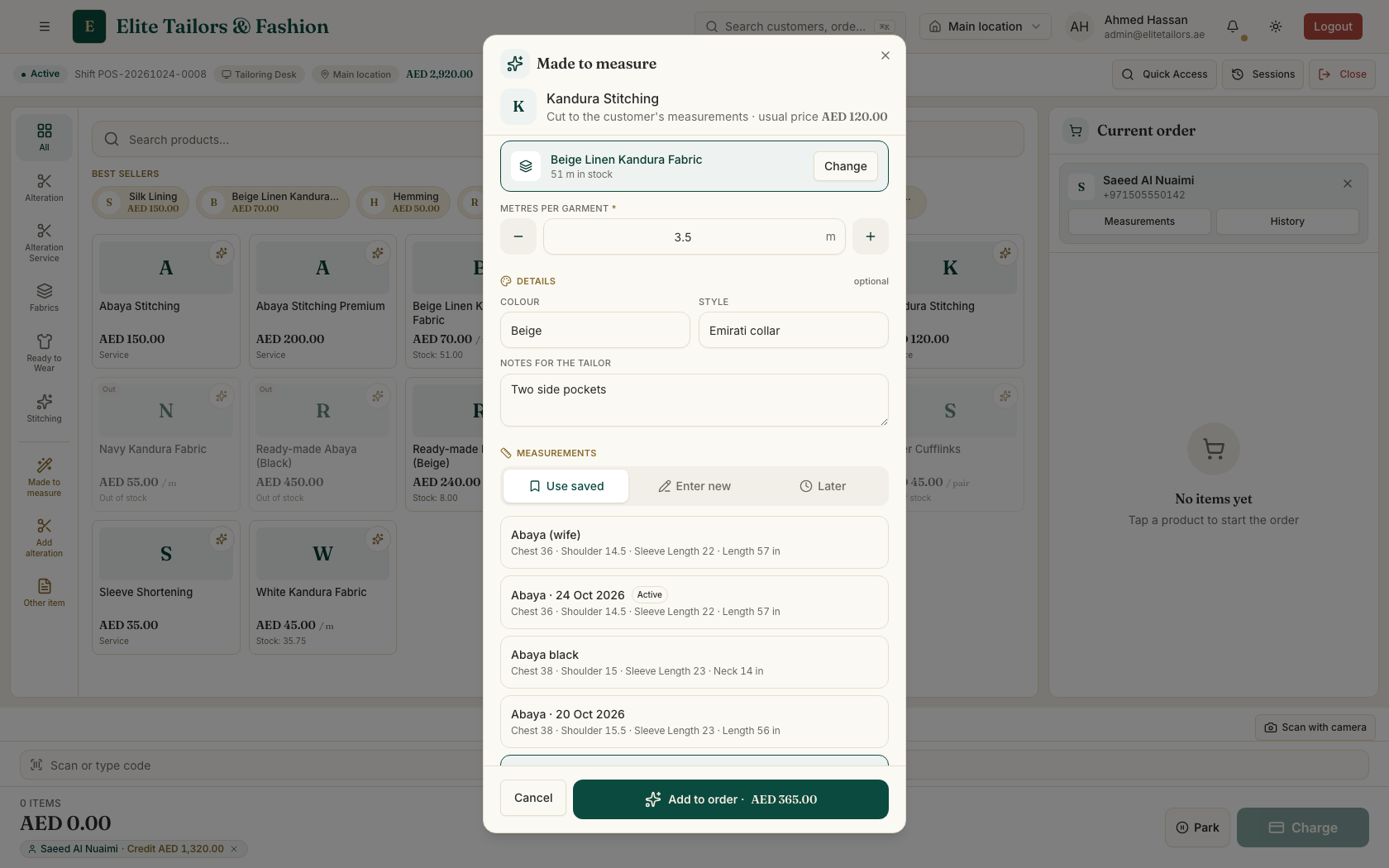
In TailorSync a made-to-measure garment starts from a product tile at the counter. Every tile has a small sparkle button. Tap it on a design you sell, such as a classic abaya or a kandura stitching service, and the Made to measure form opens with that product and its usual price filled in. Then:
- 1
Choose the fabric. Take it from your stock with the metres per garment, describe the customer's own cloth, or leave fabric out.
- 2
Add colour, style and notes. For example white, Emirati collar, and anything the tailor needs to know.
- 3
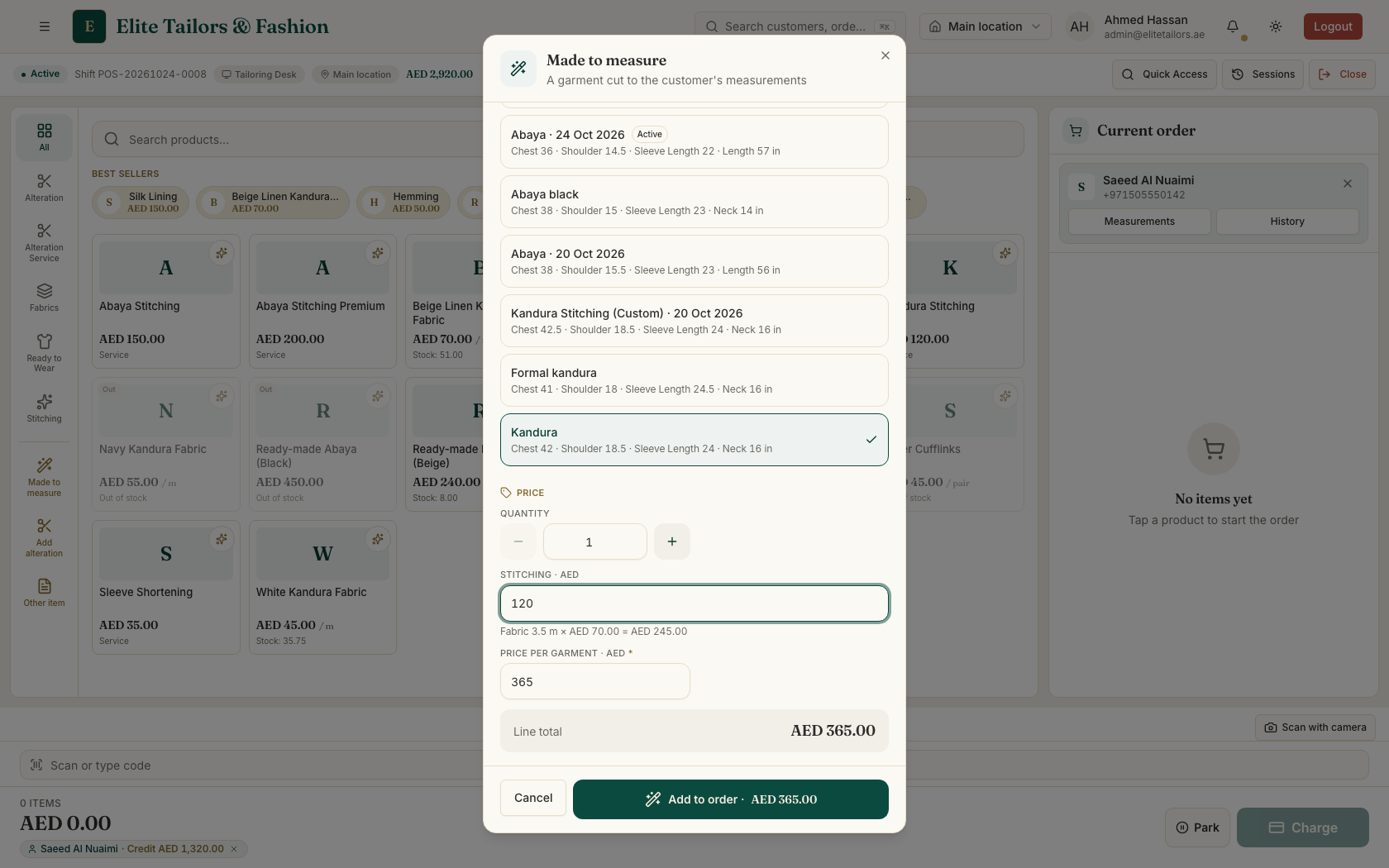
Pick the measurements. The customer's saved set named after the garment comes first, then their active set. You can also enter a new set, which is saved to their profile when you take the order.
- 4
Set the price and quantity. With shop fabric, the form adds the fabric cost to the stitching price for you.
Taking a bespoke order
A bespoke garment has no tile to start from, so tap Made to measure on the category rail and type the garment's name, for example "Kandura" or "Wedding bisht". The form is the same as above, with two differences that matter for bespoke work. You type the stitching price for this job rather than taking a list price, and you can choose Later for the measurements when you will measure at the first fitting or work from a sample garment.
Either way, a made-to-measure or bespoke garment is always taken as an order. The payment panel ticks This is an order for you, and you set the delivery date and take the deposit there. On a bespoke commission the deposit should be larger, because the cloth is cut for one person and can't be sold to anyone else if they don't come back.
Pricing the two differently
Made-to-measure suits a price list: each design has a usual price on its product, and the fabric is added on top by the metre. Bespoke needs a quote built from the cost of the cloth, the tailor's hours, your overheads and the margin you want, plus a charge for extra fittings. Keeping bespoke on its own typed price, instead of squeezing it into the price of your nearest rail design, stops the shop from quietly undercharging for its most skilled work. For how to build that quote, see how to price bespoke tailoring.
Fittings: where the two really differ
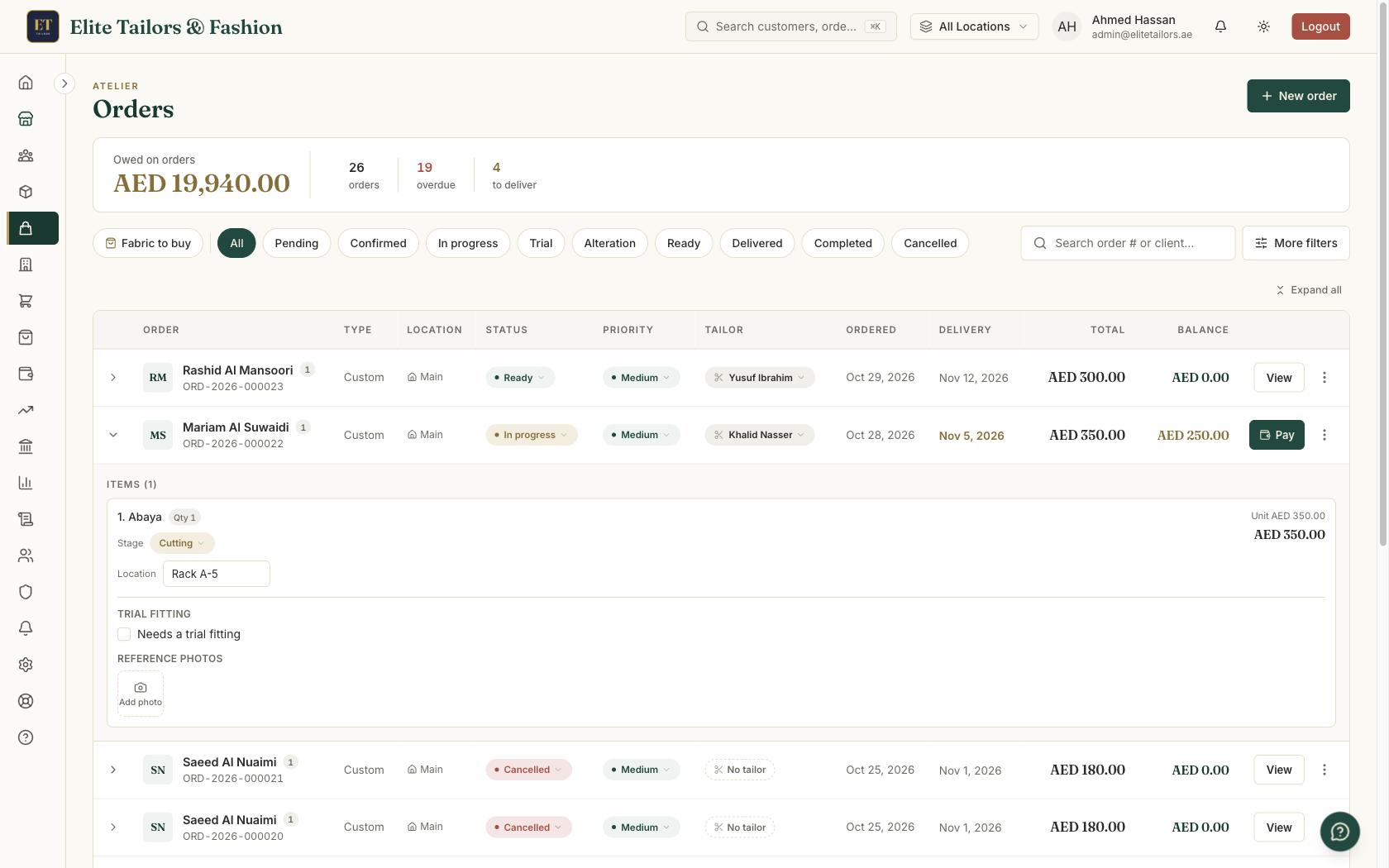
A made-to-measure order often goes straight from the workshop to Ready. A bespoke order usually stops at Trial for a fitting, moves to Alteration while the tailor adjusts it, and may go back to Trial before it is finished. TailorSync lets you move an order to any status, forward or back, so a second or third fitting is just another status change, and each change is stamped with the time and who made it. A manager has to approve marking an order Delivered or Completed while money is still owed.
When a fitting changes the numbers, update the customer's measurement set on their profile so the next garment starts from the corrected fit. The order keeps its own copy of the measurements it was taken with, so you can still see what the first cut was based on.
One workshop for both
Once the order is taken, made-to-measure and bespoke garments go into the same queue. Each garment carries its own stage, Pending, Cutting, Stitching, Finishing, Ready then Delivered, separate from the order's status, and the delivery date turns gold when it is due within three days and red once it is overdue. Give a bespoke commission a higher priority if it needs the bench first. The workshop copy prints each garment's fabric, colour, style and measurements with no prices on it, so the tailor sees what to make and not what the customer paid. For the full picture, see how a tailor order tracking system works.
Alterations on finished garments
Both kinds of garment come back sometimes. An order that was Delivered isn't closed until it is Completed, so when a customer brings back last month's abaya to be taken in, you can move that order to Alteration and keep the work on the same record. A quick alteration on something bought elsewhere is an Add alteration line at the counter: a named service with its own price and delivery date.
Common questions
What is the difference between bespoke and made-to-measure?
Made-to-measure adjusts a design the shop already makes to the customer's measurements, fabric and colour. Bespoke cuts the garment from scratch for one customer, usually with fittings and adjustments along the way. Bespoke takes longer and should cost more.
Can one shop sell ready-to-wear, made-to-measure and bespoke?
Yes. In TailorSync ready-to-wear sells at the till as a normal sale, made-to-measure starts from a product tile with its usual price, and bespoke starts from a blank Made to measure form with its own name and price. Both custom kinds are taken as orders with a delivery date and a deposit, and go into the same workshop queue.
What is custom tailoring software?
Software that takes a custom garment order with the customer's measurements, fabric and style, records the deposit and delivery date, and tracks the garment through the workshop to pickup. TailorSync does this alongside the shop's till, stock and VAT invoices, so custom work and retail sales sit in the same books.
How do I handle several fittings on a bespoke order?
Move the order to Trial for the fitting and to Alteration while it is adjusted, then back to Trial if it needs another look. TailorSync lets an order move to any status, forward or back, and records who changed it and when. Update the customer's measurement set after the fitting so the next garment starts from the corrected fit.
Should bespoke orders take a bigger deposit?
Usually, yes. A bespoke garment is cut for one person, so if the customer does not come back the shop is left with cloth and hours it cannot sell to anyone else. TailorSync records the deposit on the order, keeps the balance on it until collection, and will not take more than what is left.
Watch it
- Season 1, Episode 9: Take a tailoring order (3:36 video)
- Season 1, Episode 11: From workshop to pickup (3:10 video)
Keep reading